

Health & Science Desk | Special Investigation
Reported by Tara Junor, Senior Health & Wellness Correspondent
Every morning, before she makes her coffee, before she checks her phone, before she does anything else, Carol Simmons goes through what she calls her “five-minute negotiation.”
She sits on the edge of her bed and she waits.
She waits for her knees to decide whether today will be a manageable day or a difficult one. She waits for the stiffness in her hips to either loosen or deepen. She waits, in short, to find out what version of her body she has woken up in.
Carol is 61 years old. She was a high school track coach for 27 years. She has run three marathons. She hiked the Appalachian Trail in sections over six summers in her 40s. She is, by any measure, someone who has taken care of her body.
And yet, for the past five years, this negotiation has been the first event of every single day.
“My doctor told me it was just age,” she says. “That I needed to accept it. But I kept thinking — I’m 61, not 91. Why does this have to be my life?”
Show Me the Research That’s Changing Joint Health For People Over 50 →
Carol’s experience is shared by tens of millions of Americans. According to data from the Centers for Disease Control and Prevention, nearly 25% of all adults in the United States — approximately 58.5 million people — have been diagnosed with some form of arthritis. Among adults aged 45 to 64, the numbers are even more striking, with joint-related conditions representing one of the leading causes of disability and reduced quality of life nationwide.

The standard medical response — anti-inflammatory medications, physical therapy, cortisone injections, and eventual surgical intervention — addresses the consequences of joint deterioration. What it rarely addresses is the underlying biological mechanism that drives it.
But a growing body of research suggests that mechanism is now better understood than ever before — and that a new generation of targeted nutritional interventions may offer something that conventional medicine, so far, has struggled to provide.
What the Science Is Actually Saying
To understand why joint health deteriorates with age, you have to start with a substance that most people have never heard of: synovial fluid.
Every joint in the human body — from the large weight-bearing joints of the knees and hips to the smaller joints of the fingers, wrists, and ankles — is enclosed in a sealed capsule. Inside that capsule is synovial fluid, a viscous, gel-like liquid that performs three functions essential to pain-free movement.
First, it acts as a lubricant — reducing friction between the cartilage surfaces that face each other inside the joint. Second, it acts as a shock absorber — cushioning the joint against the impact of walking, standing, and physical activity. Third, and perhaps most critically, it acts as the sole nutritional delivery system for cartilage — which, unlike most tissues in the body, has no direct blood supply and depends entirely on synovial fluid for its oxygen and nutrients.
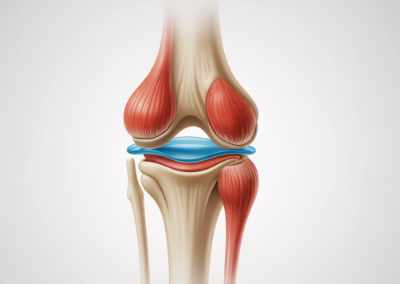
When synovial fluid is functioning optimally, joints move smoothly, quietly, and without pain. When it degrades, the consequences are felt immediately and progressively.
Find out more on how to reduce pain and greatly improve mobility→
The key to synovial fluid quality is a long-chain sugar molecule called hyaluronan. In a healthy joint, hyaluronan creates the dense, viscous gel structure that gives synovial fluid its protective properties. High hyaluronan concentration means better lubrication, better cushioning, better cartilage nutrition — and substantially lower rates of joint deterioration.
The problem is extensively documented in peer-reviewed research: hyaluronan production declines steadily from the fourth decade of life onward.
A 2015 study published in the Journal of Orthopaedic Research found that synovial fluid hyaluronan concentration in patients over 60 was significantly lower than in younger subjects, with corresponding increases in joint inflammation markers and cartilage degradation indicators. A subsequent meta-analysis of 14 independent studies confirmed the association, concluding that hyaluronan depletion is a consistent and measurable feature of age-related joint decline.
Dr. Marcus Chen, an orthopedic researcher at the University of California whose work has focused on synovial biology for over a decade, describes the process in straightforward terms.
“What we are observing in aging joints is not simply mechanical wear,” he explained in a 2024 interview with the* Journal of Clinical Rheumatology*. “It is a gradual degradation of the joint’s internal environment. The fluid that should be protecting cartilage becomes progressively less capable of doing so. The cartilage, deprived of adequate nutrition and cushioning, begins to break down. Inflammation follows. Pain follows that. The sequence is predictable and, importantly, addressable.”
The Limits of Existing Treatment
For decades, the standard of care for joint pain in older adults has revolved around two broad approaches: symptom suppression and surgical intervention.

Non-steroidal anti-inflammatory drugs — NSAIDs — remain the most commonly prescribed treatment for joint pain. Drugs like ibuprofen, naproxen, and their prescription-strength counterparts work by inhibiting the body’s inflammatory response, reducing the sensation of pain and swelling. They are effective at what they do. They do not, however, address the underlying biology of hyaluronan depletion. When medication is discontinued, symptoms reliably return.
Long-term NSAID use carries well-documented risks. A comprehensive review published in The Lancet in 2022 found that chronic NSAID use was associated with a significantly elevated risk of gastrointestinal complications, including ulcers and bleeding, as well as increased cardiovascular risk in high-dose users. For older adults, who frequently take multiple medications, these interactions add an additional layer of concern.
Cortisone injections — another common intervention — provide short-term relief that many patients find dramatic and welcome. But a 2023 study published in the Journal of Bone and Joint Surgery found that patients receiving repeated cortisone injections showed greater rates of cartilage volume loss over a four-year period compared to those receiving placebo injections. The implication is significant: a treatment widely used to manage joint pain may, over time, accelerate the very deterioration it is meant to address.
Glucosamine and chondroitin — the dominant over-the-counter joint supplements for the past three decades — have faced mounting scrutiny. The landmark GAIT trial, funded by the National Institutes of Health and involving over 1,500 participants, found that glucosamine and chondroitin sulfate performed no better than placebo for most patients with osteoarthritis of the knee. While a subset of patients with moderate-to-severe pain showed some benefit, the overall results were inconclusive enough to prompt many rheumatologists to stop recommending them as a first-line option.
The picture that emerges is one of a field that has been effective at managing pain as a symptom while making limited progress on the biological processes that generate it. Against this backdrop, a different research direction has been attracting growing interest — one focused not on suppressing inflammation after it occurs, but on restoring the joint environment that prevents it from developing in the first place.
A Different Approach
The compound at the centre of this emerging research area is a patented ingredient called Mobilee® — a high-molecular-weight hyaluronan matrix derived from rooster comb, one of the most hyaluronan-rich tissues in nature.

What distinguishes Mobilee® from standard hyaluronic acid supplements is not simply its source but its molecular composition. Standard hyaluronic acid supplements typically use low-molecular-weight hyaluronan, which is more easily absorbed from the gut but less biologically active in joint tissue. Mobilee® contains a matrix of high-molecular-weight hyaluronan combined with polysaccharides and Type II collagen — a formulation designed to survive the digestive process and reach systemic circulation in a form that can meaningfully increase synovial fluid hyaluronan concentration.
In a randomised, double-blind, placebo-controlled clinical trial published in Aging Clinical and Experimental Research, participants supplementing with Mobilee® demonstrated a 10-fold increase in synovial fluid hyaluronan compared to those receiving standard hyaluronic acid. Secondary outcomes showed significant improvements in joint stiffness scores, mobility measures, and self-reported pain levels. The effect was measurable within 30 days and continued to improve over a 90-day trial period.
Yes — I Want to See the Full Joint Genesis Formula and Clinical Evidence →
These findings attracted the attention of researchers at BioDynamix, a nutritional science company focused on age-related health interventions. Their development team spent several years building a comprehensive formula around Mobilee® — incorporating additional clinically validated ingredients designed to address every dimension of joint health simultaneously.
The resulting product, Joint Genesis™, combines Mobilee® with five additional compounds whose clinical profiles are well established:
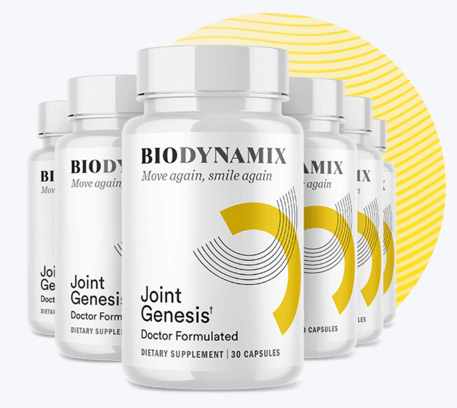
Pycnogenol® — an extract from the bark of French maritime pine trees, studied in over 160 published clinical trials. In the context of joint health, Pycnogenol has demonstrated a significant reduction in joint pain scores, decreased use of pain medication, and direct protective effects on cartilage through its antioxidant activity. A 2008 study in Phytotherapy Research found that patients with osteoarthritis supplementing with Pycnogenol showed a 55% reduction in pain scores compared to 26% in the placebo group.
Ginger Root Extract — a compound with a substantial evidence base for joint health applications. A meta-analysis published in Osteoarthritis and Cartilage reviewing six randomised controlled trials found that standardised ginger extract significantly reduced pain and disability in patients with osteoarthritis of the knee, with a safety profile superior to NSAIDs.
Boswellia Serrata Extract — derived from the resin of the Boswellia tree, boswellic acids have been studied extensively for their ability to inhibit a specific inflammatory enzyme pathway (5-LOX) associated with joint tissue breakdown. Clinical trials have shown improvements in pain, range of motion, and walking distance in patients with osteoarthritis.
Type II Collagen — the primary structural protein of cartilage. Undenatured Type II collagen, at low doses, has been shown to activate a process called oral tolerisation, modulating immune responses associated with joint inflammation and providing structural building materials for cartilage maintenance.
BioPerine® — a black pepper extract included to enhance the bioavailability of all other ingredients by up to 20%, ensuring that the formula’s compounds reach target tissues at therapeutically relevant concentrations rather than being excreted before they can act.
Vitamin D3 — included at a 2,000 IU dose to address the widespread Vitamin D deficiency prevalent in adults over 50, which has been independently associated with accelerated cartilage loss and reduced bone density.
What Patients Are Reporting
The clinical profile of Joint Genesis is supported by a growing body of real-world user experience. The product currently holds a 4.9 out of 5-star rating from over 13,575 verified purchasers — a dataset substantial enough to carry statistical weight.
The reports are consistent in their themes: reduced morning stiffness, improved range of motion, the gradual return of physical activities that had been curtailed by pain.
“I’m a former construction foreman and my body reflects 40 years of hard physical work. I’d had two cortisone injections in my right knee and was being told I was looking at replacement surgery. I started Joint Genesis as a last resort. After three months I cancelled my surgery consultation. My orthopedic surgeon actually asked me to bring the bottle in so he could look at the ingredients.”
— Thomas R., Age 67, Texas ⭐⭐⭐⭐⭐
Join 13,575 People Already Experiencing the Difference — Check Today’s Pricing & Availability →
“I have lupus alongside my joint issues so I have to be careful about what I take. My rheumatologist reviewed the ingredients in Joint Genesis before I started. She had no concerns and said the formulation was sensible. Eight weeks later I can report that my morning stiffness has reduced significantly. I’m walking my dogs again every day. These are not small things.”
— Diane K., Age 58, Oregon ⭐⭐⭐⭐⭐
“I play in a senior men’s basketball league — or I did until my knees gave me a two-year forced retirement. I’ve tried everything on the market. Joint Genesis is the first thing that’s allowed me to get back on the court. I’m not 30 again but I’m competitive again. For me that’s everything.”
— Andre W., Age 62, Georgia ⭐⭐⭐⭐⭐
oint Genesis is manufactured in an FDA-registered, GMP-certified facility in the United States. Every production batch undergoes third-party testing for purity, potency, and contaminant screening. The formula contains no genetically modified organisms, no common allergens, no artificial fillers, and uses transparent ingredient labelling — each compound disclosed at its full clinical dose.
The Broader Picture
The science of joint health is not static. Research published in the past five years has shifted the conversation in a meaningful direction — away from purely symptomatic management and toward interventions that address the biological environment of the joint itself.
Hyaluronan restoration, collagen matrix support, and targeted antioxidant protection represent a coherent, mechanistically grounded approach to slowing — and in many cases partially reversing — the progressive joint decline that has been treated as an inevitable feature of aging.
The evidence for ingredients like Mobilee®, Pycnogenol, and Boswellia Serrata is not preliminary or speculative. It is the product of peer-reviewed, controlled clinical research conducted across multiple independent institutions and published in respected journals. The clinical outcomes are meaningful, reproducible, and increasingly recognised by practitioners working in rheumatology, sports medicine, and integrative health.
What remains, in many cases, is the gap between that research and the awareness of the millions of people who continue to manage joint pain with inadequate tools — unaware that better options exist.
Back to Carol
Six months after this investigation began, we spoke to Carol Simmons again.
She had started Joint Genesis in November, following a conversation with a friend who had used it for her hip stiffness. She was sceptical — she had tried glucosamine for two years with minimal results and was not inclined to invest hope in another supplement.
“By week four I noticed something different,” she said. “Not dramatic. Just — less. Less stiffness in the morning. Less of that grinding feeling going down the stairs. I was getting up from chairs without bracing myself.”
By week ten, Carol had begun running again. Short distances — two miles, three times a week. Nothing close to a marathon. But running, unassisted, without pain dominating the experience.
“The five-minute negotiation is mostly gone,” she said. “I still have some mornings. But most days now I just get up and get on with it. I’d forgotten what that felt like.”
Doctor Formulated Joint care
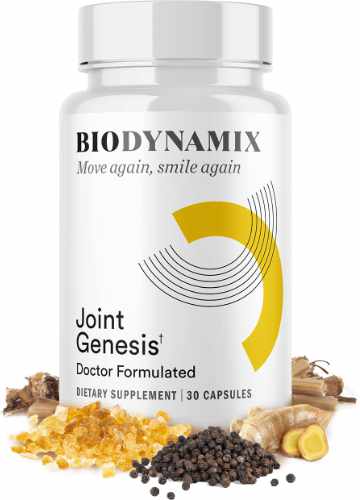
Find Out If Joint Genesis Can Do the Same For You — 180-Day Money-Back Guarantee →
Joint Genesis is available exclusively through the official BioDynamix website and is not sold through retail pharmacies, health food stores, or third-party online marketplaces. The company states this policy exists to maintain quality control and prevent counterfeit products from entering the supply chain.
Multi-bottle purchasing options are available at a discount of up to 40% off single-bottle pricing, with free shipping on qualifying orders. Every purchase is backed by a 180-day, no-questions-asked money-back guarantee.
This feature is sponsored content produced in partnership with BioDynamix. The author and publication may receive compensation for purchases made through affiliate links in this article. Individual results vary. These statements have not been evaluated by the Food and Drug Administration. This product is not intended to diagnose, treat, cure, or prevent any disease. Readers are advised to consult with a qualified healthcare provider before beginning any new supplement protocol.